
CALORIE-DENSE FOODS VS. NUTRIENT-DENSE FOODS
WHY NUTRIENT DENSITY IS MORE IMPORTANT?
Khadieja Rehman
4/29/2023
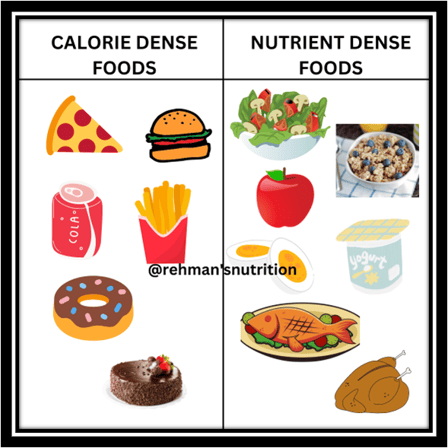
Calorie-dense foods contain more calories in each serving; alternatively, nutrient-dense foods contain more minerals, vitamins, and other vital nutrients without any or little additional fats or sugars that raise the caloric content.
Calorie-dense foods
Several processed foods, including pastries, biscuits, chips, sweets, and candy bars, are calorie dense because they have a high-calorie content and only a few beneficial nutrients. Most fast foods, such as cheeseburgers and fries, are also considered calorie dense due to their high-calorie content per volume. The calorie density of foods can be decreased by choosing low-fat cooking methods.
Nutrient-dense foods
Nutrient-dense foods are rich in beneficial nutrients like carbs, proteins, healthy fats, minerals, and vitamins. Vegetables such as cruciferous vegetables, tomatoes, and sweet potatoes offer a lot of nutrients. Many fruits, including melons, berries, and papaya, contain a wide variety of nutrients. Lean meats offer a lot of nutrients in addition to protein. Fortified whole grains, including oats, barley, and quinoa, are also high in nutrients.
Why should you eat nutrient-dense foods?
Picking nutritionally dense foods enables us to get more vital minerals and vitamins that promote health while avoiding excessive calorie consumption, which can contribute to excessive weight gain and obesity.
Calorie-dense foods do contain nutrition, but nutrient-dense foods have an increased concentration of nutrients besides just calories. Many of these foods contain empty calories that provide energy but have little nutritional benefit. Calorie-dense foods can be a part of various diets, particularly for those who need to put on weight. But if you're trying to lose or keep weight off, choose a diet high in nutrient-dense foods while attempting to avoid or limit calorie-dense foods.
Guidelines for a nutrient-dense diet
1. Opt for real foods over processed foods.
2. Aim to have plants cover at least half of your plate (vegetables, fruit, whole grains, beans, nuts, and seeds).
3. Include a lean and clean protein (plant or animal) and a healthy fat source on the rest of your plate.